


Few business decisions arrive without warning, but liquidation often comes close. Closures, downsizing, and restructuring rarely unfold in calm conditions. Owners may be facing financial strain. Executives may be answering to boards or lenders. Employees are often anxious about what comes next. In these moments, decisions carry more weight because they feel final.
Liquidation feels riskier than most business choices because it happens in public. Assets leave buildings. Auctions appear online. Questions begin circulating. Even when closure is the right move, leaders worry about how it will look and what it might signal to partners, customers, or the market. The pressure is not only financial. It is personal and reputational. That is why trust becomes the most valuable currency during this stage.
Reputation Risk During Asset Disposition
An auction is visible by nature. Anyone can see the listings. Anyone can place a bid. For some business leaders, that visibility creates anxiety. They fear that an auction might make the company appear distressed or poorly managed. They worry about photos that feel careless or pricing that looks random. In reality, perception matters almost as much as outcome.
Grafe understands this concern and approaches liquidation with a level of care that goes beyond selling equipment. Catalogs are clean and organized. Listings are accurate and professional. Assets are grouped logically instead of appearing scattered. The goal is not to rush items to market but to present them in a way that reflects discipline and structure.
This attention to detail protects brand dignity even during shutdowns. It shows stakeholders that leadership remains in control. It reinforces the message that the business is closing or transitioning thoughtfully rather than collapsing under pressure.
Transparency as a Trust Mechanism
Trust grows when expectations are clear. Grafe begins by explaining how valuations work and what outcomes are realistic. Clients are not promised inflated returns. They are given informed projections based on market data and experience. This honesty reduces tension because there are fewer surprises later.
Open bidding also plays a powerful role in building confidence. Buyers compete in a visible environment. Prices rise through demand rather than negotiation behind closed doors. Sellers and lenders can see how the market responds in real time. This transparency removes doubt about whether assets were undersold or handled unfairly.
Private sales can feel appealing because they appear discreet, but they often increase anxiety. Pricing may be unclear. Buyer interest may be limited. Questions linger about whether a better offer was possible. Auctions replace those doubts with a clear process that shows how value was reached. For leaders under pressure, that clarity matters.
Communication With Stakeholders
Liquidation affects more people than the business owner alone. Employees want to know what is happening and when. Landlords need firm timelines for space turnover. Lenders want documentation and visibility into recovery. Miscommunication can quickly turn a difficult situation into a chaotic one.
Grafe acts as a neutral third party who helps manage these relationships. Their structured timelines give stakeholders clear expectations. Removal schedules reduce friction with landlords. Detailed reporting reassures lenders. Clear instructions help buyers complete pickups safely and on time.
This role as an intermediary is often overlooked, yet it is one of the most valuable parts of the process. By handling communication through a defined system, Grafe reduces emotional strain on leaders who are already navigating complex decisions. Conflict decreases because everyone works from the same information.
Institutional Trust From Repeat Clients
Trust becomes most visible when clients return. Banks, franchise groups, and commercial landlords often work with Grafe repeatedly because consistency lowers risk. These institutions manage portfolios, not single locations. They need a partner who delivers the same level of professionalism every time.
Repeat clients know what to expect. They understand the timelines. They trust the reporting. They rely on Grafe to protect both value and reputation across multiple projects. That consistency becomes a signal of reliability. It allows institutions to move faster because they do not need to re evaluate the process with every new liquidation.
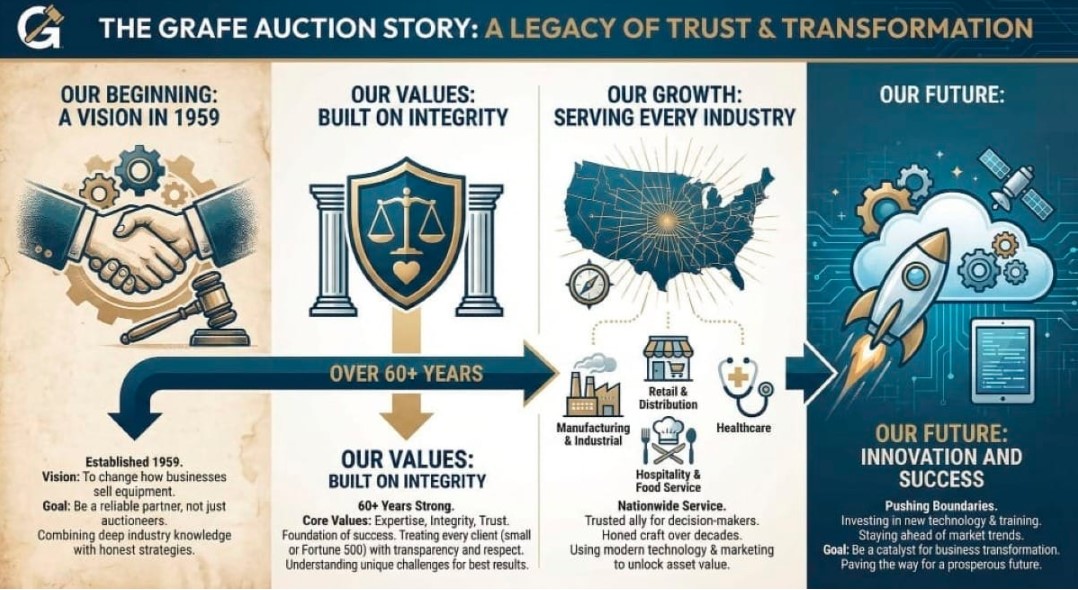
This long term trust does not come from marketing. It comes from showing up during difficult moments and handling them with care. When a lender or operator chooses the same auction partner again and again, it reflects confidence built over years of shared experience.
Liquidation is often misunderstood as a simple financial transaction. In reality, it is one of the most sensitive decisions a business can make. It touches reputation, leadership credibility, and personal identity. Assets may be leaving a building, but trust is either preserved or lost in the process. Grafe Auction operates at the intersection of structure and empathy. They bring transparency to uncertain moments. They protect dignity during public transitions. They communicate clearly when emotions run high. In doing so, they show that liquidation is not just about selling what remains. It is about handling the end of a chapter with integrity.

