


Most readers will never notice the margins of a beautifully printed book. They won’t stop to admire the spacing between paragraphs, examine the precision of a cover’s binding, or wonder how many revisions were made before the first copy went to print.
But get those details wrong, and suddenly they become impossible to ignore.
A poorly arranged page can make reading uncomfortable. An unpolished manuscript can interrupt an otherwise compelling story. A cover that fails to reflect its genre can leave the wrong impression before anyone reads the opening sentence.
The finest parts of publishing are often the ones readers never consciously see.
For writers preparing to share their work with the world, those details represent a different kind of creative challenge. It is not simply about finishing a manuscript, but understanding how editorial decisions, visual design, production standards, and distribution come together to shape the finished book.
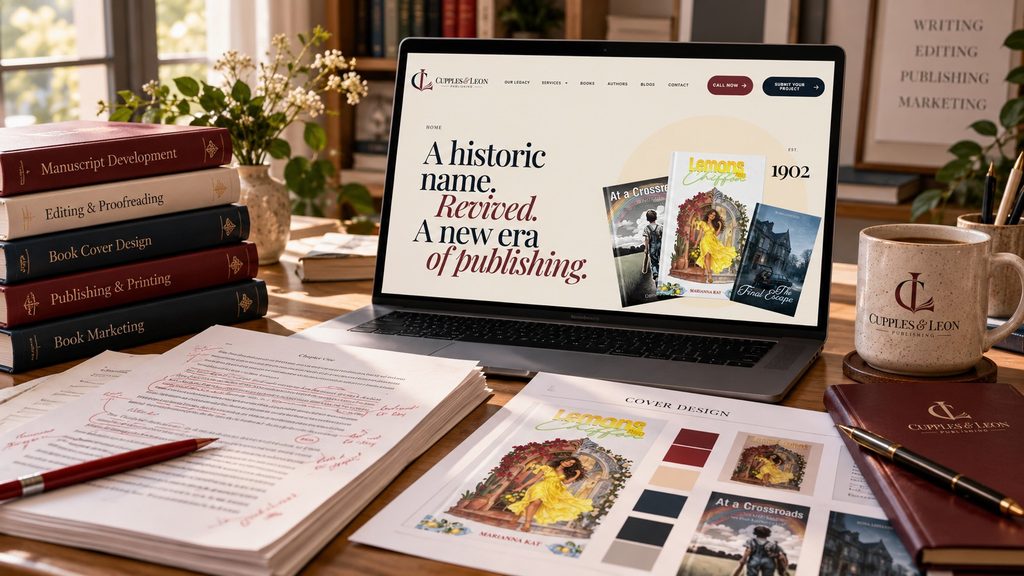
That attention to the broader publishing process is central to the services offered by Cupples & Leon, a book writing and publishing business that combines manuscript development, editing, design, printing, and marketing assistance.
Where Good Books Begin Taking Shape
Every book begins somewhere different.
A novelist might arrive with a completed first draft that needs structural refinement. A business professional may have years of expertise but little experience organizing it into a manuscript. Someone writing a memoir might have an extraordinary personal history without knowing how to turn those memories into a cohesive narrative.
Cupples & Leon offers ghostwriting and book writing services across several categories, including fiction, nonfiction, memoirs, biographies, children’s literature, and comic books.
Its writing services describe a collaborative process that begins with understanding the author’s concept, followed by outlining, manuscript development, and revisions.
That preliminary work matters because a compelling idea is not automatically a compelling book.
Readers need a sense of direction. Characters must develop convincingly. Information must follow a logical progression. And the voice of the writing should remain appropriate to the subject and intended audience.
Whether a writer works independently or seeks professional assistance, those foundational decisions influence everything that follows.
Editing Is About More Than Finding Mistakes
A misplaced comma might seem insignificant, but editing involves far more than punctuation.
Developmental editing considers the larger structure of a manuscript. Does the story progress naturally? Are its ideas organized effectively? Does the opening establish the right expectations? Are there unnecessary sections or gaps that affect the reading experience?
Copyediting works at a more detailed level, addressing consistency, language, sentence construction, and clarity.
Proofreading provides another stage of review, focusing on errors that remain as a manuscript approaches publication.
Cupples & Leon includes these editorial services within its publishing portfolio, along with manuscript formatting.
For authors, the important consideration is choosing the level of editing appropriate to the work rather than assuming that one proofreading pass can address every editorial concern.
The strongest editing should make the writing clearer without unnecessarily replacing the personality of the person who wrote it.
The Cover Makes a Promise Before the Story Begins
Walk into a bookstore and consider how quickly the eye moves across different covers.
A mystery novel might establish tension through restrained typography and unsettling imagery. A children’s book could communicate energy and imagination through illustration. A memoir may rely on a more personal, reflective design.
These visual choices help readers understand what kind of experience a book might offer.
Cupples & Leon provides custom cover design for print and digital editions, including consultations, design concepts, revisions, and preparation of final artwork.
Its design services also include illustration, giving authors additional options when a book calls for original visual storytelling.
Effective cover design involves more than creating an attractive picture. It requires understanding genre conventions, typography, proportions, visual hierarchy, and the practical specifications of the intended format.
A design must work as a full-sized printed cover, but it may also need to remain recognizable as a small thumbnail on an online bookstore.
The challenge is finding an approach that satisfies both without losing the character of the book.
The Physical Experience of Reading Still Matters
Digital publishing has changed the way books are purchased and read, but the physical book remains a carefully designed object.
Its trim size affects how comfortably it fits in the hand. Paper selection influences weight, opacity, and texture. Binding choices affect durability and how the pages open. Interior formatting determines whether a long reading session feels effortless or frustrating.
Cupples & Leon’s printing services address these production decisions through options including offset printing, digital printing, print-on-demand, and specialty letterpress printing.
The company also describes a production workflow involving consultation, layout preparation, proof approval, printing, and delivery.
Each approach suits different requirements.
Offset printing is commonly associated with larger production runs. Digital printing provides flexibility for smaller quantities. Print-on-demand allows copies to be produced in response to orders, reducing the need to maintain a large inventory.
For an independent author, understanding these options can influence production planning and budgeting.
The goal is not to select the most elaborate printing method. It is to choose the format and specifications that make sense for the book and its intended readers.
A Book Must Work Beyond the Printed Page
The publishing process also involves preparing books for the platforms through which readers discover and purchase them.
A paperback and an eBook may contain the same words, but they require different technical treatment.
Printed editions need accurate page dimensions, margins, cover measurements, and binding specifications. Digital editions must account for different screen sizes, reading applications, navigation, and adaptable text presentation.
Cupples & Leon offers support for print and eBook publishing, formatting, and distribution preparation, with its website referencing platforms such as Amazon and Barnes & Noble.
The company also provides self-publishing consultation, including guidance related to platform selection and royalties.
For authors new to publishing, these technical and commercial considerations can be unfamiliar territory.
Understanding file requirements, publication options, distribution arrangements, and rights is an essential part of making informed decisions about a book’s release.
Reaching Readers Requires Its Own Creative Thinking
A book may be carefully written, professionally edited, and beautifully printed, yet still face the challenge of finding an audience.
Book marketing calls for a different set of decisions from book production.
Who is most likely to appreciate the subject? Which communities already discuss similar books? What aspects of the story are worth highlighting? And how should those ideas be communicated before and after publication?
Cupples & Leon offers marketing support that includes targeted advertising, social media campaigns, publicity and review outreach, author branding, and website development.
Its services also extend to book trailers, incorporating scripting, storyboarding, video production, and promotional distribution.
These tools provide different ways to introduce a book to potential readers.
A nonfiction author might benefit from content demonstrating their expertise. A fiction writer may focus on genre communities and reader engagement. A visually driven children’s book could lend itself to illustrated promotional materials.
There is no single promotional formula that applies equally to every title.
The important task is identifying the audience and developing communication that makes the book relevant to them.
A Publishing Process Built Around Different Needs
One notable aspect of Cupples & Leon’s service portfolio is the range of stages it covers.
Not every author requires ghostwriting. Not every manuscript needs substantial developmental editing. Some writers may have already arranged cover design but need assistance with formatting, printing, or marketing.
Others may be seeking guidance across several parts of the process.
By offering these services within a broader publishing model, Cupples & Leon presents authors with options for addressing different requirements as their projects develop.
The company also offers an initial consultation intended to discuss an author’s ideas, publishing objectives, possible solutions, and estimated project costs.
For writers considering professional publishing support, such discussions are an opportunity to clarify the proposed work, responsibilities, rights, costs, and expectations before committing to a particular arrangement.
The Craft Behind Every Finished Book
A reader rarely sees the marked-up drafts, design revisions, production specifications, or promotional planning behind a finished title.
They experience the result.
They notice when the writing flows naturally, when the pages are comfortable to read, when the cover feels appropriate, and when the book delivers what its presentation promised.
Cupples & Leon’s combination of writing, editorial, design, printing, publishing, and marketing services reflects the many disciplines involved in creating that experience.
For authors, the journey involves both artistic choices and practical decisions, each contributing something different to the finished work.
Perhaps that is one of the most interesting things about a well-produced book: when the details come together, the reader is free to forget about the production entirely and become absorbed in the story.
And that is precisely why those details deserve attention.
Explore Cupples & Leon: https://cupplesandleon.com/

